
Category: 100 days 100 grand
Second prelaunch email out
The second prelaunch email leading up the book’s publication date went out today! If you’d like to receive the next one, join the mailing list here, or take a look at the email first…
Readership into five figures for new LinkedIn article
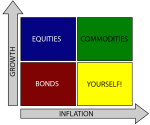 It’s not news if that’s how you found this site, but an article I wrote for LinkedIn’s Pulse is among the most-viewed articles on the business networking site this week, with over 25,000 views in its first 48 hours…
Can a textbook ever be literature?
 I’m just back from my honeymoon, where apart from the obvious* I did a lot of reading. Literary stuff: Nobel Laureates, classic suspense, top journalism. And it set me wondering what the definition of literature really is.
No textbook (or textbook author) has ever won a Nobel or a Booker. But a few great ones – like Alberts and his Molecular Biology of the Cell – would deserve consideration if they were in the running. And the literary world is starting to understand non-traditional literary forms as valid literature: look at Spiegelman’s Maus or Moore’s multi-layered Watchmen, both graphic novels.
So a teaching text is literature, according to my definition of it. (That’s wonderful ideas, beautifully communicated.) Not literary in the flowery Faulkner or artful Wolfe sense (although I’m not dissing those uber-dudes) but literary in the Hemingway or headline sense: brilliantly precise and to-the-point sentences, arranged into exactly the right order to bring complex concepts into concrete existence in the reader’s mind.
100 Days, 100 Grand started as a pocket tract: I’d guessed 40,000 words you could finish in a weekend that’d give you some tips for maximising your income as a freelancer. Something akin to Strunk and White. Now it’s looking like an A4-sized 750-page textbook, and I’d like it to be a great one. And a great textbook – the kind people annotate, scribble in margins, put fluorescent tabs in – perhaps means treating it as literature. Wonderful ideas, beautifully communicated.
If this grand project of mine turns out to be something people leave their jobs and remortgage their homes for, the least I owe them is to give them a damn good read.
So as I near the editing phase of the work (a great chunk of the actual facts and figures stuff is reasonably complete and in sequence) I’m going to be looking even more critically at my use of language. Whether each sentence uses the smallest number of the shortest words needed to convey meaning. Whether each bullet is constructed in parallel; whether each checklist item uses active verbs and the active voice. That I’m using second person invisible everywhere except the author’s bio. Check, revise, and check again. Make it really worth the reading.
That’s the goal, anyway…
* Shooting handguns, driving 4WDs, and exploring coral reefs 12m beneath the waves. What did you think?
100 Days, 100 Grand and System 1, System 2
It’s time to get psyched.
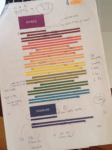 The Tasks in 100 Days, 100 Grand are simple actions in logical sequence, most involving spreadsheets, documents, and websites. But even if you’re expert with Excel and Word, you’ll find your brain turning backflips at times—and wonder why.
The reason involves something called System 1 and System 2. The terms (shortened to S1 and S2) were coined by psychologist Daniel Kahneman to denote the main ways humans respond to information. Each can be summed up in a paragraph, and they’re the only bits of proper psychology in the book. (After all, psychology is a complex subject, and an instructional text on freelancing isn’t the forum for explaining it even if I had the training.) But a basic outline of the idea gives you a useful model for understanding customer motivations. Call System 1 the feeling system and System 2 the thinking system.
System 1 is what governs most people’s behaviour, most of the time. It’s your animal instincts and emotional responses, evolved over millions of years, most spent trolling the African grasslands in fear and hunger. That sudden rush of adrenalin urging you towards fight or flight, that rush of anger when you see someone threatened, that irrational fear of boarding the plane because you saw a crash on the news yesterday—all these reactions are from your System 1.
S1 thrives today because for most creatures, reacting without thinking is a useful skill. (You don’t want to think for too long when your food chain’s apex predator is looking at you as if you’re labelled LUNCH.) System 1 attaches great importance to what’s here and now, right in front of your nose. It’s subjective, driving you to do what feels right at the time.
If System 1 shows your animal side, System 2 is arguably what makes you human. It’s your ability to think critically and reason logically. It’s how a bunch of bipeds in Africa started wearing clothes, making tools, and building communities. System 2 lets you plan ahead, assessing information with a cool head and making decisions that deliver expected outcomes.
System 2 is harder to use than System 1. Because it asks you to stop and understand stuff, grasp concepts and engage in abstract thought. That’s why you’ll find parts of 100 Days, 100 Grand hard work, even if you find the individual Tasks simple. Every chapter makes you think and reach decisions using S2, not S1. System 2 is objective, forcing you to analyse situations and make considered responses.
(System 2 is the reason 100 Days uses a lot of checklists. Checklists force you to put your thinking head on, and make decisions rationally and logically.)
If there’s one difference between 100 Days and a self-help book, it’s that 100 Days forces you to use your System 2, not the feel-good of your System 1. Although eliciting reactions from other people’s System 1 is one of the bigger tasks you’ll check off along the way. Because there’s another term for “eliciting reactions from System 1”. It’s known as Marketing.
On writing (well)
 Days 36 and 37 of the 100 Days plan are among the most didactic but most fun: they instruct readers in how to structure and create a good sales letter. Rather than isolating the methods of sales copy as standalone techniques, I’ve included a short writing course that reminds and instructs readers in the core principles of written English.
Sources? Of course the usual suspects were on my desk at the time–Stephen King’s “On Writing” and William Zinnsser’s “On Writing Well“–so the methods aren’t anything most people will argue with. What’s interesting is just how often the very best sales letters (I studied over 1,000 for this book) agree with what makes readable prose, too.
There’s good copywriting, and there’s good writing. And the two aren’t that different.
Why the halfway mark is more than halfway
 November’s been a good month for 100 Days. (Not least because it’s been a slow month for my other work.) Huge improvements, but the big news is the main text is now hitting 100,000 words… which means I’ve found the edges of the jigsaw.
Why that matters:
In any large project – from a thriller novel to a house build – a big part of progress is “finding the edges”. Recognising where the parameters of the job stop and start. And for most of the last four months I was trying to define them.
The basic ten-part, fourteen-week structure of the book’s been clear since I started writing in July. But the fine detail within it – what the reader does each day, and how those actions slot together in sequence to deliver the broader objective of a £100,000 income – was much harder. Now, after many sleepless nights of blood, sweat, and toil, I believe my jumbled mass of actions and outcomes (over 400 pages of scribbled ideas) is starting to become an orderly series of information and instructions a non-marketer will find useful. And completed chapters are starting to fly out.
Originally I thought 100 Days would be a tract of 40-60,000 words. (After all, it started as just a blog post and Buzzfeed listicle outlining the idea!) As it turns out, there are two sub-audiences: the techie who knows the tools, and the freelancer who’s expert in his own field but not necessarily at marketing himself. The best way to cater for both is to separate informational (concepts) and instructional (methods and tasks) content. So each chapter now starts with a set of information and ends with a list of tasks that put them to use, coming together in a “Do you understand/have you completed” checklist. (Savvy marketers only need the methods; other experts will do the daily Tasks.)
This means an increase in wordcount, and the total’s now likely to break 200,000 words and 1,000 pages. A side effect is that I’ve changed the publishing format: the paperback edition will be US Letter-sized, 21.59 x 27.94 cm, so people have plenty of room to scribble their notes in the margins.
(The ebook editions, as a happy byproduct, now look a lot better! With full-width tables and diagrams and better formatted text and lists. I’m testing the e-version on both an ancient Kindle Keyboard and a swoopy new Voyage and it looks great.)
The mailing list is growing, although there aren’t any updates yet; I’ll be sending out sneak peeks at chapters and diagrams as they harden. Head down again – see you next month!
Launch date revised, along with the text
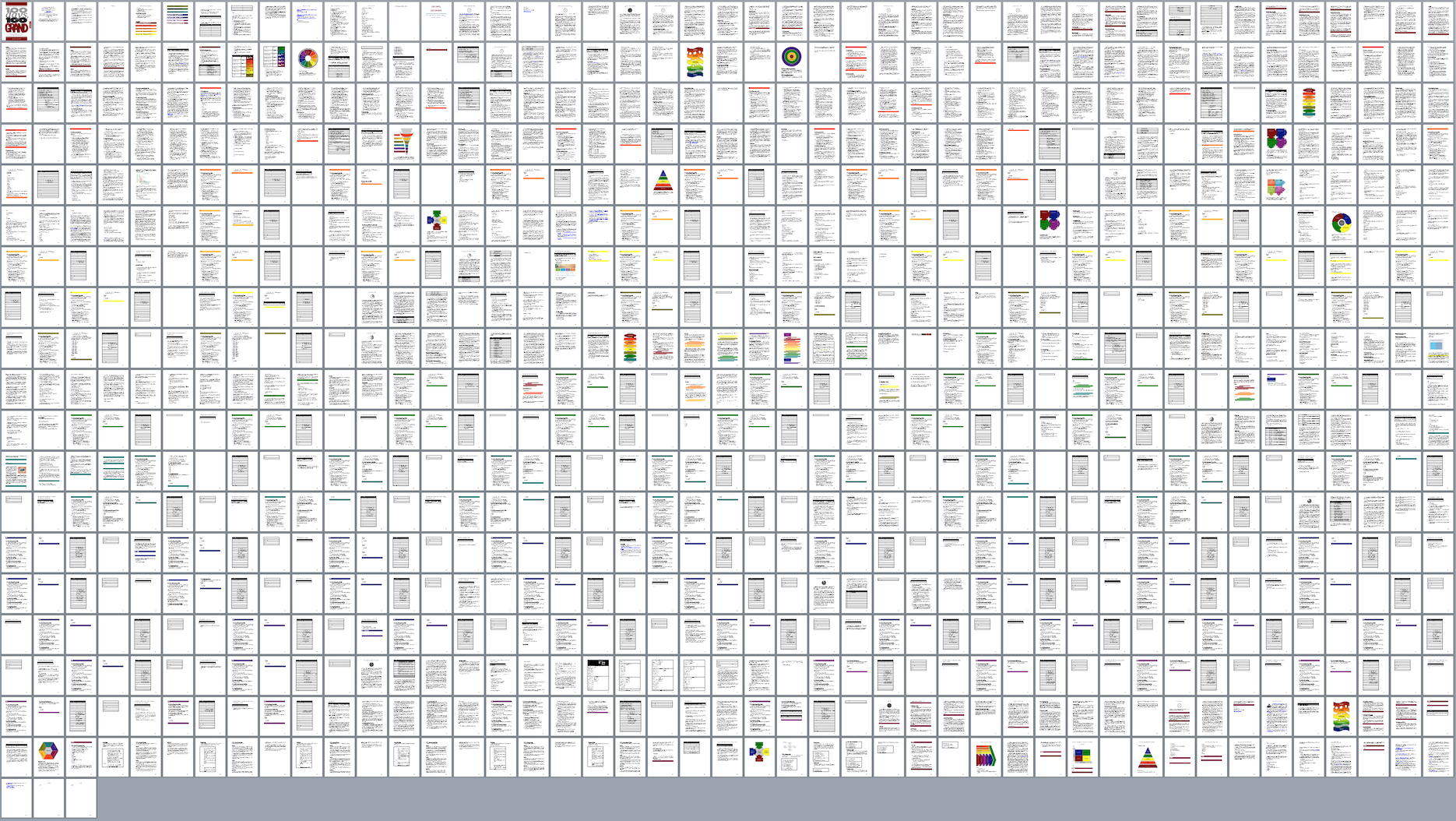
It had to happen: 100 Days isn’t going to happen in 100 Days. The launch date’s now looking like next year. Just to give an idea of how big a project this is, this graphic is how the whole book so far looks in Word, viewed at 10% normal size…. around 500 pages and 70,000 words! With the final wordcount now looking like 200,000 plus.
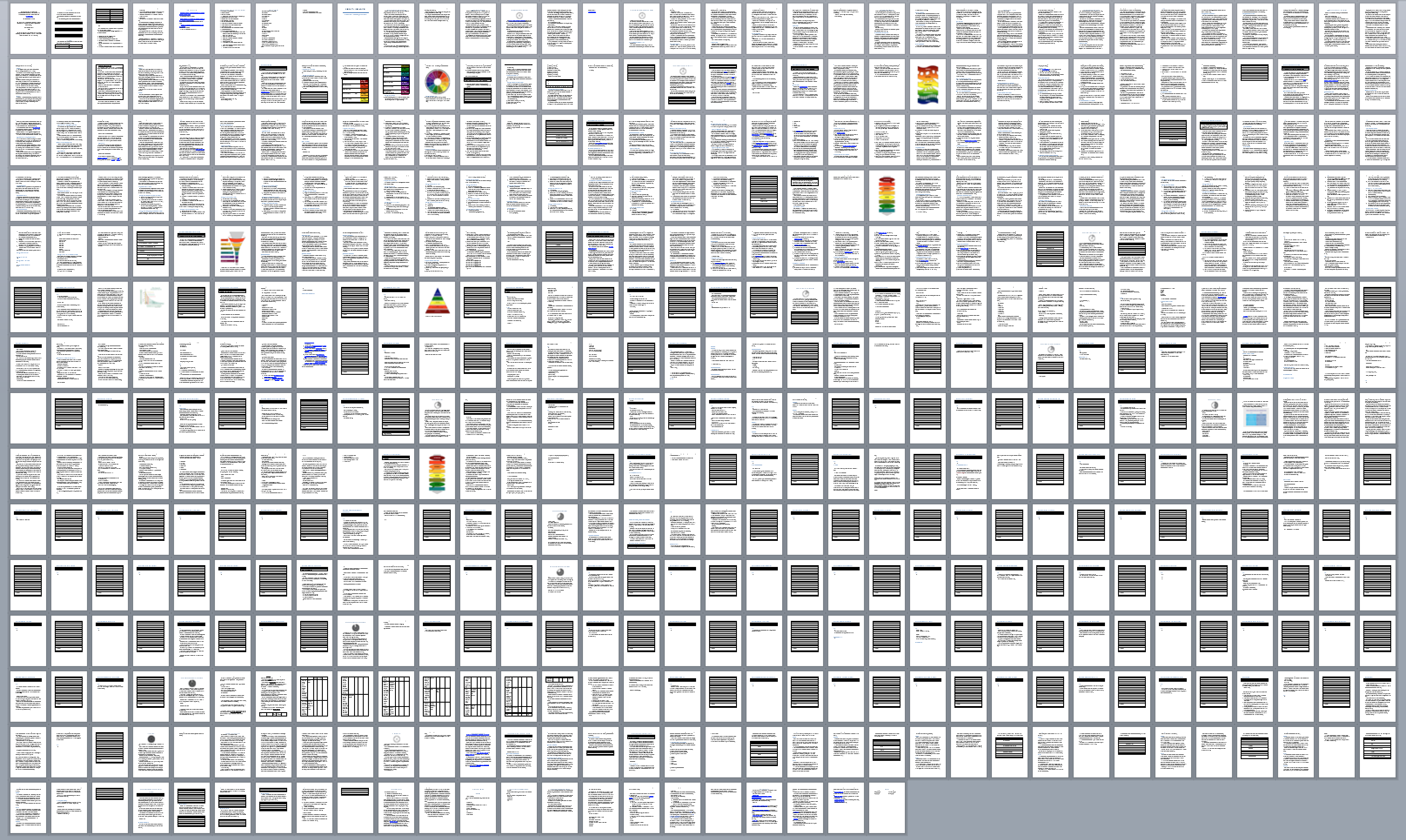
Why 200,000? Because while the informational content of chapters has stayed roughly as estimated – about a thousand words per – the instructional content is taking up much more space than expected.
There’s a reason. I want the book to be usable in two ways:
a) As an adaptable methodology for those who know some marketing; and
b) As a rigid and precise step-by-step guide for those who don’t.
The first group will use the main information content of the chapters, but will have less use for the daily Tasks; they’ll adapt the methods to whatever desktop applications they use. The second group, however, needs more hand-holding. I’m assuming this group has no more than a basic understanding of office applications and the Internet, so the Tasks are much more important to them. Meaning each Task needs to be as as didactic and precise as I can make it – numbered in sequence to be easy to follow and crossreference. And that’s taking up more space than I thought.
(When you’re writing for people who are expert in their own fields, but not necessarily marketing- or technology-literate, you need to take extreme care with how much knowledge you assume of your audience.)
The good news: all ten Parts are now planned out in some detail, including the actual Tasks the reader needs to complete each day, with all the numbers put in. (Reasonable expectations as to per-day prospecting, conversion percentages applied to your sales funnel, and so on.) My job now is largely writing up remaining chapters (each Day is one short chapter) and making sure the whole book is self-consistent, since sections and checklists refer to and build on each other as you work your way through.
Far from easy, but if it were easy, it wouldn’t be worth doing…
Two months to go…
W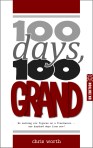 ell, the Chris does Content office (a converted garage in southeast London!) currently makes a beehive in midsummer look more like a convention of lazy bums; with the whole 100-day plan mapped out from June, July’s been about pulling together my thousands of pages of notes and checklists going back over a decade, flipping through with a critical eye and deciding what works.
 It’s a lot of effort – especially since my own copywriting business hasn’t let up for the summer, and a guy’s got to eat. But I’m pleased with progress so far. Not with the text overall – I thought the book would run to 60,000 words, and it’s looking like well over 150,000 – but with the way each chapter feeds into the next, building piece-by-piece towards a single goal.
Each chapter’s working out around 1,000 words of instructional text – everything from writing your sales website to building your campaign letter – and a set of tasks, usually between 3 and 8, that take between half a day and a day to complete. Oh, and there are now 10 sections rather than a planned 9 – List-building, while vital, can be learned in one week rather than two, so before it now comes a week devoted to networking the 100 Days way (i.e. not involving cocktails with strangers). I’ve also realised “the numbers” will be different for everyone – that £8,000 a month figure we’re aiming for may be 100 clients for someone selling web subscriptions, just 2 or 3 for a freelance writer like me – so in the second week a whole day goes on building a sales funnel and populating it with figures appropriate for your industry sector.
Of course, big news of the week is that the cover design‘s now done!
Site coming together….
The last week or so since I had the idea for 100 Days, 100 Grand has been frenetic. So far I’ve ploughed about 13,000 words into the book’s 100-chapter structure (each chapter is a task list and instructions for one day, obviously) and growing 2,000 words a day.
That’s faster than I usually write – there are people who can churn out high-grade copy at 4k and up, but I’m not one of them. But the job of writing this book is qualitatively different: it’s not so much writing as collating. I’ve got all the methods and magic already – because I’ve been using them for a decade-plus to build my own client roster.
The sweat and toil the next few (or possibly more than a few) months is about getting it all together into a handbook freelancers new and old can actually get value from. Then another month or so of editing, refining, and testing. Sign up for the mailing list here. Thanks!
 100 DAYS, 100 GRAND - be earning six figures as a freelancer... 100 days from today!